Touch and Movement

IMG_8775[1]

“Little children, in fact, touch everything they see, thus obtaining a double image (visual and muscular) of the countless different objects they encounter in their environment.” (p.116, para 2)

When a teacher presents the sounds of the alphabet to the child, she does so by saying the sound and tracing the shape of the sound with her finger.  She then invites the child to do the same.  The presentation of the lesson incorporates auditory, visual, and touch.  The movement of the tracing develops muscle memory and connects their movement to the image they see.  When children begin writing their muscles will remember the movements they traced when introduced to the letter.

Students grade, sort and match sensorial objects isolating the skills associated with differentiating objects using the senses.  They work towards mastery and in some cases enjoy doing the matching using a blindfold.  They enjoy developing the ability to see with their hands!

Montessori, M. (1972). The Exercises. In The discovery of the child (pp. 116-120) New York: Ballantine.
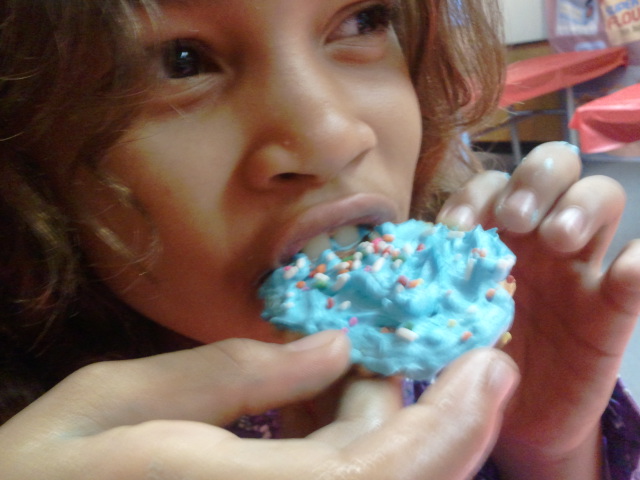
The importance of developing senses


SAMSUNG

Montessori, M., & Costelloe, M. J. (1972). Introduction, Childhood: A Social -Problem. The secret of childhood (pp. 100-102). New York: Ballantine Books. (Original work published 1966)

Thoughts after reading PART 1: 16. Lack of Comprehension

“The soul is constantly being nourished with the sight of natural beauties like the rising of the sun, or the delightful vision of a work of art, or with the sound of melodious voices or instruments….  If there were no ego to take delight in these various sights and sounds, what good would there be in these elaborate organs of sense?” (p.102, para. 1-2)

Part of the Early Childhood curriculum in a Montessori Classroom includes sensorial exercises.  Building sensorial skills brings concrete meaning to ideas that without experience are abstract. Sensorial activities help the child differentiate, categorize and grade smells, sounds, flavors, colors, sizes and textures.  Through his senses, the child learns to understanding the world around them and developing meaningful vocabulary, helping him to express himself and connect to his environment.  When a child feels a rough material, he connects the feeling with the meaning of the word, gaining understanding beyond basic comprehension.