Mindfulness is a practice of being present in the moment. Some accomplish this through meditation. Others focus on their breathing. One could also observe every sensation their body experiences or the natural environment around them. When I think of mindfulness and Montessori, I reflect on how one does “a work”. There is such intentionality in every movement and focused concentration of the exercise at hand.
During my own Montessori training, I discovered a new way of being. Instead of moving through the world in a daze, I learned to slow down and to pay attention. During my training, I was a single parent with two young children. I was recovering from trauma, so a lot was plowing through my cluttered brain. Because the lessons I was learning to teach required focus and concentration, the activities cleared my mind. All there is is the work. Children see the teacher’s deliberate, careful movements, and when it is their turn, they can also become mindful and focused. This is an important part of the Montessori normalization process of the child.
“The child who has become normalized is truly a worker-a child who, with deep joy, is absorbed in his work, and whose personality is calm, attentive, and respectful” – Maria Montessori
I think back to Karate Kid, when Mr. Miyagi teaches Daniel to focus on activities like “wax on, wax off” or catching a fly with chopsticks. All of these exercises taught movement, focus, and concentration. Like Montessori lessons, martial arts benefits from mindfulness.
“Your mind is like water. When it’s turbulent, it’s difficult to see. But if you become calm, you can see your reflection.” – Mr. Miyagi
Mindfulness and Montessori Philosophy goes beyond the classroom lessons. It spills out into a way of life. In this new way of being, one is self-aware and can regulate emotions. Other benefits can include enhanced relationships where empathy and understanding abound and a sense of peace. When you are present there is more purpose because you are living a life of intention.
Maria Montessori emphasizes the importance of respecting the work that a child engages in and encourages us to try to understand them. She sees each child as an individual capable of accomplishing or learning how to perform tasks to become independent.
Step back for a moment and consider how having respect means allowing others (whether child or adult) to do things for themselves or discover their way of being, rather than imposing your will and way of doing things on them. Micromanagement takes a lot of energy. It is exhausting trying to bend everyone to your way. As a teacher giving a lesson to a child, you can show someone how you do something, then let them try, and allow them the space to discover their own way.
It is easy for me to recall my own experience of having my way of doing something criticized and my negative, resistant response to criticism. Some of us carry criticism wounds from our childhood that make us touchy and very resistant to this type of “teaching”. Yet if someone invites me to do a task with them and shows me how they do something and allows me to try along with them, I am much more receptive. Likely, I will learn from what I am shown and then add my flair to what I have learned and make the process my own. In turn, they may also learn something by showing me and then observing what I end up doing. This is one way in which teachers become better teachers is by observing their students and seeing the students’ ideas being added to their own.
Prepared Environment
Montessori Teachers should spend time preparing the environment for their students. In a classroom where children are working, the teacher observes how the students are responding to their environment and will be making notes regarding what is working or not. Is something hard for the student to get to? Is there enough space for children to do their work? What type of energy does the room seem to influence? Are the children interested in the activities? Is there an activity on the shelf that nobody is using, and why?
Look at your own home or work area. Like you observe children in a classroom, observe yourself in your space. How do you feel in your environment? Clutter can cause anxiety. It is very helpful to regularly make donations of things you are no longer using. What things do you have in your space that remind you of negative experiences? Maybe these things need to be purged. Can you reach the shelves you need to get to? Do you need to have a step-stool available? Continually adjust things and prepare your environment for your success.
If you have children in your home, it is important to prepare an environment for them as well to encourage their independence, especially in the kitchen and bathroom. Some Montessori homes even have a small fridge that may give a child access to snacks or drinks they can get for themselves. short shelves, accessible dishes, and cleaning supplies. I cannot stress the importance of having your children be part of a community that cares for the environment. They get a lot more from the experience of being part of the family community instead of being served, and that works best when the home environment is created with them in mind.
Humanitarian values
Maria Montessori said, “The child is both a hope and a promise for mankind.” In a Montessori classroom, the teacher promotes peaceful resolutions, conversation, expression of feelings, empathy for others, internal discipline, and, most importantly, models these principles to their students. This is an important area in which to align yourself. In your life, are you seeking peaceful resolutions to problems? Are you engaging in meaningful conversations, looking for agreeable solutions with others? Are you expressing your feelings healthily? Are you considering other people’s feelings? What do you do to practice internal discipline? In a world so full of conflict, as Montessorians, we should be doing our best to be a beacon of peace and hope for the people in our lives.
Having a positive outlook and looking for the good, focusing on love and kindness, can make a difference in your life and the people around you. Take time to be present in nature. Look at all the beauty. Make sure to seek good things to fill your soul and don’t allow yourself to get sucked into negativity. I do not mean to be naive or avoid all that may be going on, but try to stay balanced and make sure positivity can permeate into your soul so you can share it with others.
Often, parents hope that their children will learn from the mistakes they made, so their children do not repeat the same mistakes. Sometimes they make hard-line rules based on preventing these mistakes, without sharing their experiences due to their own embarrassment or unwillingness to show their children their own flaws, thus maintaining a perfect parent persona. I believe there is a better way.
Giving up my own persona of an innocent mother who does not do anything wrong was key to opening up conversation and being able to share experiences in which my children could actually learn from what happened to me and feel free to share openly about what was going on in their world. Of course, it also helps to not quickly respond or shut them down because you don’t like what you are hearing. If you are clearing the space for true dialogue, it is important to learn to listen more than lecture. Ask them if they want your help or advice instead of just assuming they want it. Sometimes, just like you, what they need is someone to listen. Do not trivialize or make fun of their distress.
Eventually, your children will likely need to come to terms with their childhood experiences, good and bad. It is a good thing, even if it is an uncomfortable experience to have them analyze events of their youth that you played a role in. Sometimes things are remembered that you do not have any recollection of, or they will talk about how you responded to a situation that caused them a certain amount of grief. They may also bring up funny things you did that seem totally out of character. I encourage you to allow them to process what they need to process. People can experience or remember the same event very differently. Again, listening is key.
My children are now grown. I actually have probably completed whatever adulting lessons they have needed at this point. I am happy to say they are confident, smart, independent adults with their own passions, ideas, and purpose for their own lives. I did not know during their teenage years that this would be the result. As a matter of fact, I would often question if I was doing okay or wonder what other people would think of my parental choices. Now being on the other end and seeing the begining of their adult lives, I can say that yes I made mistakes; however, allowing them their own choices, supporting what they wanted or said they needed, letting them explore who they are and who they want to be is what ultimately helped them be who they are today.
Chapter 1: The Six-Year-Old Confronted with the Cosmic Plan
As I jump back into Montessori Philosophy reading blog, I decided to start with To Educate the Human Potential. Six year olds are intrigued by nature and can use their imagination to learn lessons about earth and our existence. One thing that is difficult in this age of media and entertainment is so much exposure to stimulation where imagination is derailed towards other endeavors such as superheroes, villains, fantastical creatures, and fantasy through so much gaming and streaming. For young people it can be confusing to determine what is real. Think about how much more they would gain using their imagination to connect with our science, math, language, and sociology? Without the distraction of media influences they can absorb so much more of the actual world around them.
As a teacher it was much harder to connect with young people that lived in a fantasy world. You would actually have to meet them in their imagined world to connect with them and then try to get them interested in other endeavors beyond fantasy play. The pretend kitchen, with pretend faucets’, plastic food, pretend stoves, and useless fridges. In the outdoors these kitchens produce bark mulch concoctions that are inedible. What would they rather do? Bring them into a real kitchen. Have them help prepare real food and learn how to use a real kitchen safely with the reward of food to eat and share with others.
Chapter one starts by pointing out the difference in personality that occurs around six year olds that make them very receptive to cultural lessons. Montessori recommends sowing as many seeds of interest as possible. This way the seed is there waiting for germination later. Another important matter for six year olds is the development of moral activity. During this time they are trying out their own judgement and trying to impose their judgements on others. “An inner change has taken place, but nature is quite logical in arousing understanding, but a claim to mental independence, a desire to distinguish good from evil by his own powers, and to resent limitation by arbitrary authority.”
Six year olds also need to participate in organized activity, mixing with others in a group. It is normal for groups to develop leaders that the others obey. It is natural for mankind to organize itself and these young people will be able to use their morality, sense of right and wrong, to be part of organized society later in life.
At this age it is also important to allow the child to learn by their own activity and allow them to follow their choices and has a need for exercising their own mind. In Montessori philosophy teachers are considered guides not dictating what it is they need to learn but giving them what they need to satisfy their curiosity. Montessori says they must have ABSOLUTE freedom of choice. This frees the teacher from syllabuses and time , but the teacher needs to be knowledgeable in every subject so the teacher can help the student in their endeavors. “We shall walk together on this path of life, for all things are part of the universe, and are connected with each other to form a whole unity. This idea helps the minds of the child to become satisfied, having found the universal center of himself with all things.”
In my experience, there are many Montessori schools that are not true to guiding students and instead impose assigned school work, worksheets, and homework. This is not in line with Montessori philosophy. I’ve had my share of sheets tracking which lessons a student has had and where they are at on their not so self led journey. In these environment I even feel a lack of freedom. If I am not free as a teacher, how can expect the students to feel they have real choices and are learning what they are wanting to learn. When I am at my best as a teacher, I am afloat watching and observing the actions of the children, thinking about what work they would want to do and looking to see how I might help draw their interest to new areas. My real work is in preparing the environment. The key to this preparation is observing the classroom.
I have reached a stage in my life where my children are grown. Although they faced hardships as young people, they have become independent. They are freethinking individuals who want to make a positive change in the world. I couldn’t ask for more!
“Peace is what every human being is craving for, and it can be brought about by the humanity through the child.” – Maria Montessori
If we raise children to be lifelong learners, they could truly impact the future of our planet. Allow them to develop and nurture their compassion for others. One thing I have to remember is to listen. I should not try to solve any problems that arise unless they ask for help. They need to have the opportunity to experience success and failure. So, keeping in line with Montessori principles, they experience the outcomes of their choices. No one tries to fix their mistakes for them. Often, just like me, they just want someone to listen while they work out their solutions.
I am not a fan of the approach of ‘now that you are 18, you need to move out and support yourself.’ I suppose this is like teaching your child to swim by throwing them into the water. We live in a world where this could lead to desperation. Choices are more limited while they are trying to figure out how to “adult”. I prefer going into the water with them. I show them and help them learn. At the same time, I gently encourage them to start swimming on their own.
So for a child entering adulthood it is important to watch and see what they are confident in and see what they ask for help with in order to develop their own independence separate from you. Be available to help, but try not to do what they can do for themselves.
For a young adult learning to take care of their bodies it could be helping them learn about health insurance, selecting a doctor, making appointments, and picking up prescriptions. They may need guidance regarding money management and learning how to use money to take care of their environment. They may request assistance in budgeting, opening bank accounts, how to make deposits, transfer money, paying bills, and taxes. These tasks when accomplished or mastered builds confidence and independence.
Parenting an adult should be a balance between showing, assisting, and acknowledgment of their ability with the goal of building their own intrinsic value and confidence that will allow them the freedom and independence to swim on their own.
“Rewards and punishments, to speak frankly, are the desk of the soul, that is, a means of enslaving a child’s spirit, and better suited to provoke than to prevent deformities.” Maria Montessori
Students will ask for my judgement or approval regarding their art, appearance, and behavior. My goal is for students to develop the ability to look for themselves, making their own evaluation. So my response to their questioning is usually a return question such as:
What do you think?
Do you like the work you did?
Do you think you did good?
In regards to behavior, children are often hard on themselves. I may remind them of positive points to help them balance their own evaluation. If there is some thing in their behavior they see was disappointing I may say something to the effect of “We are all learning at school” and ask “What could you do next time?” A child seeing themselves as bad does not serve their progression. Why should they try if they always fail? They need to see that they can choose to learn new ways of acting in which they achieve the results they want for themselves. They need to experience the success of evaluating their own behavior, choosing a new behavior and feeling good about that choice. In regards to rewards, this is their internal reward from inside themselves, which surpasses any sticker or sweet treat.
I spent the last ten years without the title: Montessori Teacher. Those that know me, know that it is rare to have an in depth conversation with me without the subject turning to Montessori Philosophy and the value it has had for me, not only when I was a teacher but in the way I desire to treat others.
My most recent job adventure was a sales position. I went to call on a couple of my friends who had started their own Montessori school. During the visit, I was perplexed by the comment regarding their disbelief that I was no longer teaching.
Then I asked myself, If it wasn’t about how much money you make, then what would I be doing?
Teaching.
Why?
Because I believe what Maria said,”Within the child lies the fate of future.”
About 12 years ago, a young first-grade student was writing in her daily journal and was obviously distressed and upset. She told me that she hated cancer. Cancer killed her dog and hurt other people in her family. I responded what do you want to do about it? This young person organized a school walk around the playground raising money fight cancer. Another student, in the same class, was upset that people didn’t have enough to eat and she organized a food drive for a local homeless shelter. I want to emphasize that they did it, these young people with their passion decided how to make difference. They were not shut down or even coddled, but guided at a young age to create change instead of standing idly by. With this beautiful philosophy, possibility stays open for these young people and they do not have to fall into status-quo because they experience ultimate freedom to choose and act.
I am now starting to see students I had over a decade ago evolve into young adults. Nothing gives me as much joy as watching as they blaze new paths, having had the background of Montessori education. They learn that they can try anything and that they can independently choose to make a difference in the world.
As a Montessorian, when I see a child or newborn baby I see possibility. All hope for the future lays in the child. Maria saw children as the way for peace in the world. If we do not help children learn to see themselves as possibility and instead limit them to a narrow path avoid of self expression, we are also limiting the potential of the world.
Much is discussed regarding the state of education today; however, it is not the only issue at hand in determining the success of a child. In true Montessori environments the teacher guides the child in such a way that the child can discover their own possibilities and their place as a world citizen who is up to much more than gaining a paycheck. In the world of technology, many children can be seduced by imaginary worlds and all the while world around them is passing by and ultimately being destroyed.
As Montessorians we should be reaching out beyond the walls of schools to encourage youth around the world to not only participate in the world, but actively join together to create a world in which they truly want to be part of and contribute to with new ideas and visions beyond our comprehension.
As I worked at different Montessori schools, one question always was in the back of my mind. Why don’t the adults within the school treat each other with the same respect that they give to children in the classroom?
After Montessori education, I went on to get my MBA. During my business studies I started developing ideas about how Montessori philosophy could be used in business communities. I imagined a work environment where the boss was more of a guide, encouraging and empowering employees instead of always giving all the answers and maintaining all control and power. I imagined everyone working together towards goals and each person giving contributions not for praise but to move the whole company forward, a place where people acknowledge their mistakes and learn from those mistakes without fear of punishment.
I want to encourage those who embrace Montessori philosophy to allow it to flow into all areas of your life. Help guide others to these ideals that promote peace and allow everyone to discover their contribution to the world. I want to continue to discover how to apply the Montessori Philosophy in ways that really empower others through continued learning and exploration.
“The development of the senses actually precedes that of higher intellectual faculties, and in a child between ages three and six it constitutes his formative period.” (p.143 para. 4)
Montessori education focuses on helping the child develop naturally and during his Early Childhood years a child is growing and adapting to his environment around them. They are attracted primarily to discover things they can discover through their senses. What a key time to hone in on observation skills as well as discerning slight differences between stimuli! Often children in this age group truly enjoy the sensorial exercises where that practice sorting, organization, and grading exercises picking up on the smallest differences and elements that can attribute to their success in their future careers.
One example is the chef who may need to determine how much more seasoning to add to a dish using sight, taste or smell. A doctor may need to be able to pick up on various symptoms through observing with their senses such as listening carefully to heartbeat.
Montessori, M. (1972). Generalizations on the training of the senses. In The discovery of the child (pp. 143-152) New York: Ballantine.
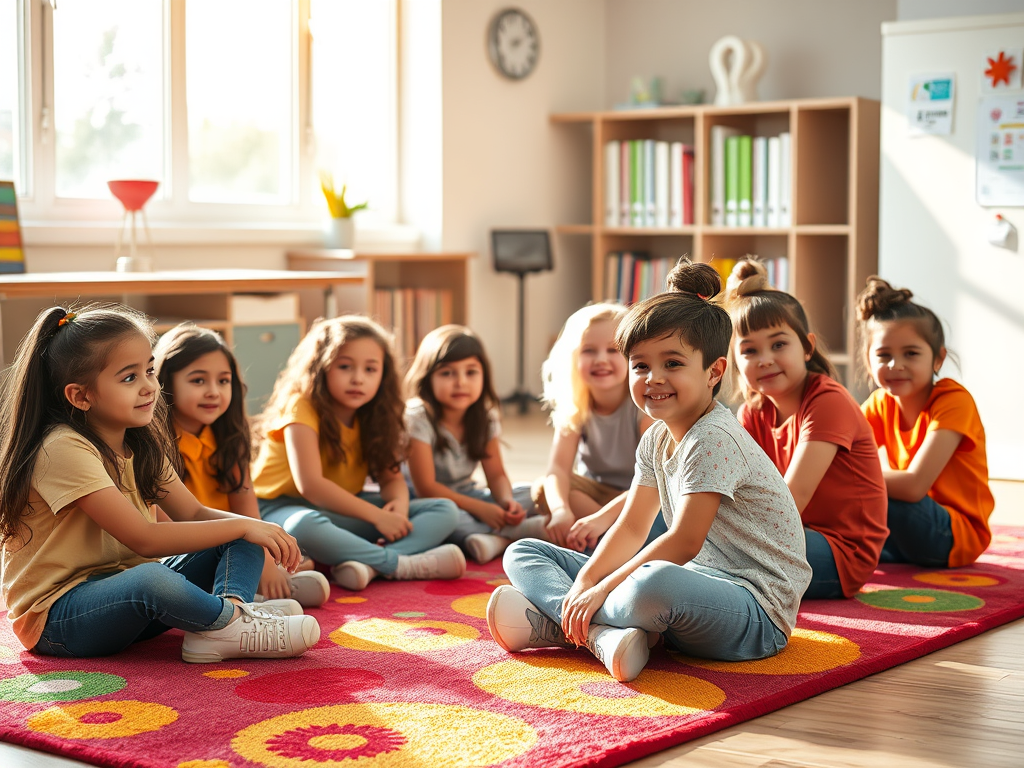

 As a Montessorian, when I see a child or newborn baby I see possibility. All hope for the future lays in the child. Maria saw children as the way for peace in the world. If we do not help children learn to see themselves as possibility and instead limit them to a narrow path avoid of self expression, we are also limiting the potential of the world.
 Montessori Philosophy