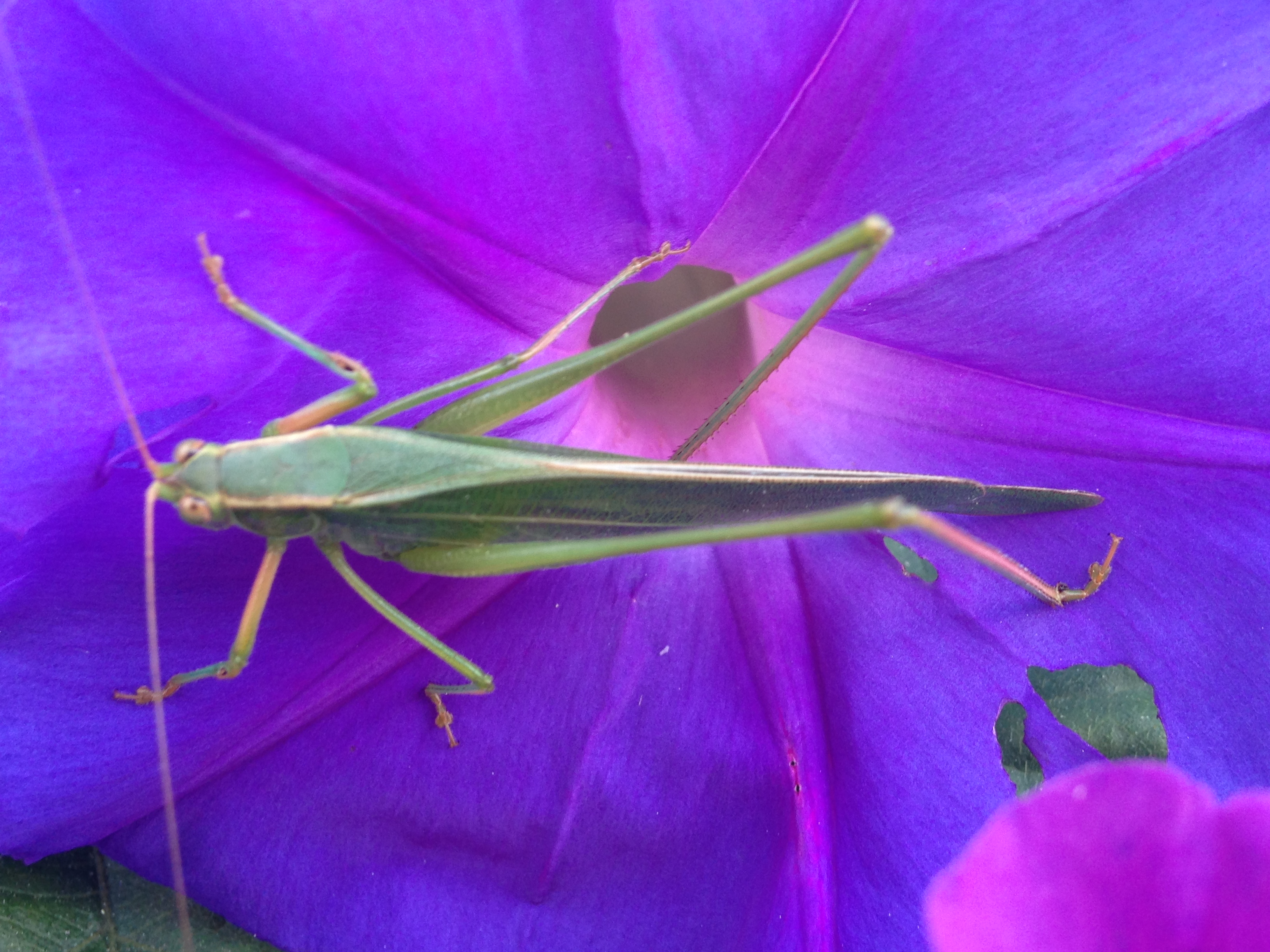
Embrace your maternal instincts!

2014-03-09 09.51.26

“Maternal instinct” is thus a generic definition given to the guiding instinct that is concerned with the preservation of the species. It has certain characteristics that are common to all living creatures. For one thing, it demands a sacrifice of all other adult instincts.” (p.201, para.5)

Thoughts after reading Part III: 28. Guiding Instincts

Montessori describes the deep sacrifice made by other creatures on behalf of their offspring; the bird build a nest, bees build a beehive, and spiders become intimately attached to their egg sack. Their instincts guide them to give their offspring what they need at the perfect time for their development. Yet as adults, we try to mold the children to fit into our adult world, instead of creating the nurturing environment they need in order to grow, “He acts as a butterfly would act that would break the cocoon of its larva to encourage it to fly. Or he acts like a frog that would draw its tadpole out of the water so that it might breathe on land….” (p.205, para. 2)

We may not be able to perfectly sacrifice ourselves as other animal species do for their children; however, being aware of our selfish tendencies can allow us to open our eyes to the child’s perspective and make changes that could benefit our children . A child needs an emotional and physical environment that is suitable for their development. As they grow and change their environment also needs to shift to support those needs.

Montessori, M., & Costelloe, M. J. (1972). Introduction, Childhood: A Social -Problem. The secret of childhood (pp. 199-206). New York: Ballantine Books. (Original work published 1966)

Mastery of movement

IMG_7356[1]

Montessori, M., & Costelloe, M. J. (1972). Introduction, Childhood: A Social -Problem. The secret of childhood (pp. 96-99). New York: Ballantine Books. (Original work published 1966)

Thoughts after reading PART 1: 15. Movement

“A child has a natural desire to master the voluntary use of his organs of movement. If he fails to do so, he cannot externalize the fruit of his intelligence.” (p. 99, para. 1)

Every purposeful movement we make is connected to our mind. Our thoughts align with our movements. A child is working to master this connection between their mind and body. Maria emphasizes the importance of movement in the development of intelligence and reasoning abilities.

It is one thing to know how to do something, but quite another to have mastered the physical ability to perform the task. Some activities require a great deal of practice or even special muscle development. One may understand the mechanics behind performing a front flip; however, it is quite a different skill to perform the gymnastic feat.

In a Montessori classroom, children learn through movement. Many children have learn to care for their environment. Various lessons include the gathering of materials from the shelf to a work area. Many classrooms have a line for children to practice balancing on. In addition to gross motor movement, many of the classroom’s practical life exercises involve very precise movements developing fine motor skills, including the pincer grip in preparation for writing. When learning the sounds of the letters, children touch and trace each sound practicing the muscle movement associated with writing the letter.

Purposeful hands

 IMG_7355[1]

Montessori, M., & Costelloe, M. J. (1972). Introduction, Childhood: A Social-Problem. The secret of childhood (pp. 80-87). New York: Ballantine Books. (Original work published 1966)

Thoughts after reading PART 1: 12. The Hand

“Sometimes very small children in a proper environment develop a skill and exactness in their work that can only surprise us.” (p. 87, para 2)

Children want to touch things. Use of their hands is an important development, essential for human life. Maria reminds us how we use hands to express ourselves, ceremoniously, and for essential human activity. In spite of their importance, many children are told repetitively not to touch certain items and to keep their hands to themselves.

Children are interested in doing what they see the adults doing. They want to be part of their family and participate as others do. Work that may seem mundane to an adult, can be very meaningful to child. Sometimes as parents it is so easy to jump in and do a task quickly, even though the child wants to help. Allowing them the opportunity to carry, to pour, to fold, to wash, or to sweep gives them purpose.

A Montessori classroom provides an environment for which controlled movements can be perfected. You will find that many Montessori students love to help in the kitchen, as they have practiced pouring and cutting exercises at school. A parent may look at a Montessori classroom and ask where the toys are; however, one may not understand that the child finds joy in an environment that they can take care of and which allows them to practice activities they want to do.