
Priority #1 is the Child

untitled (1 of 1)-3

“The greatest crime that society commits is that of wasting the money which it should use for children on things that will destroy them and society itself….” (p.214, para.1)

Thoughts after reading Part III. 30. The Rights of the Child

Maria demands that society set its priorities straight.  The child is the most important investment in the future of our world, yet often budgetary and funding choices within the home or government do not show this.  So many lives could be changed if more effort was placed on creating the proper environment for children to prosper in the home and at school.  Parents should be prepared for the great responsibility of child rearing, understanding their responsibility goes beyond just the physical health of their child.  The greatest thing a parent can do is love their child beyond their own self, placing their needs beyond their own.  This does not mean catering and being a slave to your child’s whim.  It means thinking about was is best for your child.  Do your research, seek to understand the child, become an observer and respond to their natural development that is unfolding before you.

I have now completed Maria Montessori’s Secret of Childhood.  I hope you have enjoyed this journey with me. I look forward to my next read:  The Discovery of the Child.

Montessori, M., & Costelloe, M. J. (1972). Introduction, Childhood: A Social -Problem. The secret of childhood (pp. 209-216). New York: Ballantine Books. (Original work published 1966)


Hope for the Future

magical lighting (1 of 1)

“Within the child lies the fate of the future. Whoever wishes to confer some benefit on society must preserve him from deviations and observe his natural ways of acting. A child is mysterious and powerful and contains within himself the secret of human nature.” (p. 208, para.3)

Thoughts after reading Part III: 29. The Child as a Teacher
Children are the most important thing that we have to offer our future. It is in our best interest to allow children to develop and grow into “normal humans.” Normal to Maria, is perhaps different than what many of us think. Maria views the normal child as one who is “precociously intelligent, who has learned to overcome himself and to live in peace, and who prefers disciplined task to futile idleness.” (p. 148, para. 1)

This is also the true nature she believes to be inside all men, but can be hidden by deviations and struggles that disrupted the man’s normal development as a child. Often men create wondrous technologies and inventions that seek to make life better and the same technology is used for atrocities. What is meant for good is made into evil. Maria says that we need a higher form of civilization in order to have hope for our world and this can be achieved through the child. The child is our hope for a future in which society can triumph. We wish for children that become virtuous adults, looking beyond acquiring things, fulfilling their spirit through making the world a better place.

Montessori, M., & Costelloe, M. J. (1972). Introduction, Childhood: A Social -Problem. The secret of childhood (pp. 207-208). New York: Ballantine Books. (Original work published 1966)

Embrace your maternal instincts!

2014-03-09 09.51.26

“Maternal instinct” is thus a generic definition given to the guiding instinct that is concerned with the preservation of the species. It has certain characteristics that are common to all living creatures. For one thing, it demands a sacrifice of all other adult instincts.” (p.201, para.5)

Thoughts after reading Part III: 28. Guiding Instincts

Montessori describes the deep sacrifice made by other creatures on behalf of their offspring; the bird build a nest, bees build a beehive, and spiders become intimately attached to their egg sack. Their instincts guide them to give their offspring what they need at the perfect time for their development. Yet as adults, we try to mold the children to fit into our adult world, instead of creating the nurturing environment they need in order to grow, “He acts as a butterfly would act that would break the cocoon of its larva to encourage it to fly. Or he acts like a frog that would draw its tadpole out of the water so that it might breathe on land….” (p.205, para. 2)

We may not be able to perfectly sacrifice ourselves as other animal species do for their children; however, being aware of our selfish tendencies can allow us to open our eyes to the child’s perspective and make changes that could benefit our children . A child needs an emotional and physical environment that is suitable for their development. As they grow and change their environment also needs to shift to support those needs.

Montessori, M., & Costelloe, M. J. (1972). Introduction, Childhood: A Social -Problem. The secret of childhood (pp. 199-206). New York: Ballantine Books. (Original work published 1966)

Letting the child do for himself

IMG_1651

“Our concept of the education of children thus differs not only from those who do everything for a child themselves but also from those who think they can leave the child in a purely passive environment. It is therefore not enough to prepare objects for children adapted in size shape to their needs: adults must also be trained to help them.” (p. 198, para. 3-4)

Thoughts after reading Part III: 26. The Instinct to Work

The Montessori teacher helps the child perform tasks alone and they are trained to observe the and guide the child based on their individual needs. It is a disservice to prevent a child’s natural growth and development. Children need to act for themselves in order become independent adults who can learn, think and act for themselves.  When the action is accomplished the child is elated and their confidence blossoms. When they are interrupted they may feel discouraged to try again or they may become too dependent on the adult to do for them.

Before jumping into assist the child, take a few minutes to watch. If the child is having difficulty and asks for help, try to model the action for them in distinct and easy to follow motions that they can copy on their own. Try to be patient and do not rush the child as they try to perform the task. If the child seems intent on their task, let them continue to work on it on their own. If they accomplish the task entirely on their own, they will experience intrinsic reward of accomplishment.

Montessori, M., & Costelloe, M. J. (1972). Introduction, Childhood: A Social -Problem. The secret of childhood (pp. 185-198). New York: Ballantine Books. (Original work published 1966)

Desire for work

IMG_7850[1]

“A child’s desire to work represents a vital instinct since he cannot organize his personality without working: a man builds himself through working. There can be no substitute for work, neither affection nor physical well-being can replace it.” (p.186, para. 1)

In a Montessori environment the child develops internal motivation that leads to pursuit of occupations that they enjoy. Although the child is performing educational and developmental tasks, we should acknowledge that this is their work. The child’s occupation is to develop and the materials in the classroom environment are designed to give the children the freedom to work.   A Montessori child may become an adult driven towards selecting occupations that they enjoy because they have had the opportunity to explore a multitude of disciplines, self selecting areas in which they desire to know more about.

As adults, when we do what we love it does not feel like work. As a society we have attached negative feelings towards work as if it is some kind of drudgery; like a child, we should have a natural desire for work  and working should give us a  source of satisfaction.  Working because our work is enjoyable leads to a happier life.

Montessori, M., & Costelloe, M. J. (1972). Introduction, Childhood: A Social -Problem. The secret of childhood (pp. 185-189). New York: Ballantine Books. (Original work published 1966)

Embracing the child inside

IMG_5269[1]

“If physical, mental, and nervous diseases that afflict adults can be traced back to childhood, it is in the life of the child that we notice the first symptoms.” (p.184, para. 1)

My father told to me that as an adult I am the same person that  I was a child. Each day I try to acknowledge this pure part of myself that is free of judgment or expectations.

Life experiences are unavoidable and impact the child, creating obstacles in their natural development. In therapy, the counselor often helps the patient reconnect with their “inner child.” Maria reminds us that as children, many of our issues developed from experiences we endured. Ripples of consequences from events of our youth influence our adult mind today.

As a teacher and a parent we must strive to do our best to cause positive ripples in children’s’ lives. Embracing the child in myself, helps me relate to children because I am making an effort to see their perspective. Taking the time to relate to the plight of the child is worth the results. Showing understanding and partnering with them on their developmental journey is the best gift you can offer.

Montessori, M., & Costelloe, M. J. (1972). Introduction, Childhood: A Social -Problem. The secret of childhood (pp. 183-184). New York: Ballantine Books. (Original work published 1966)


Children and mealtime issues

2014-01-19 12.02.45

“When the time came to eat, tiny children would occupy their time with properly arranging their napkins, with looking at their knives, forks, and spoons in an effort to remember the exact way to hold and use them, or in assisting a companion smaller than themselves.” (p.178, para. 2)

Thoughts after reading Part II: Repercussions on Physical Health

Maria reminds us that animals know when to eat and even an infant has their own rhythm and pace when eating. Over-eating may be caused by psychic issues, “The child is attracted by the sight of food, which is judged only by the external sense of taste. The instinct of self-deprivation, the vital exterior force is weakened or disappears.” (p. 178, para. 2) The child who become part of the food preparation process and focus on the proper use of utensils or setting place settings has increased their interest in eating beyond the flavor of food.

Another issue that arises is the child that refuse to eat. We want to feed and take care of children and if our child does not want what we make for them, we may get upset or disappointed. We tell our children not to waste food or encourage them eat faster. In response, children put up self-defense mechanism regarding mealtime they may include extremely slow eating or even refusal to eat at all. If other areas of their life are under extreme adult dictatorship, they may be more apt to punish the adult through their mealtime actions.

Montessori, M., & Costelloe, M. J. (1972). Introduction, Childhood: A Social -Problem. The secret of childhood (177-181). New York: Ballantine Books. (Original work published 1966)


Deviating off the path of development

IMG_1572

“Experience has shown that normalization causes the disappearance of many childish traits, not only those which are considered to be defects but also others which are generally thought to be virtues. Among the traits that disappear are not only untidiness, disobedience, sloth, greed, egoism, quarrelsomeness, and instability, but also so-called “creative imagination,” delight in stories, attachment to individuals, play, submissiveness, and so forth.” (p. 154, para. 1)

Maria lists deviations which cause a child to depart from their “primitive plan of development.” A deviation is something has pulled the child off the path of development which they would naturally be drawn to follow. In these instances it is in response to the adults in the child’s lives influence, which is often not purposeful. Understanding these deviations can help us assist the child to return to his intended path.

Fugues: Fantasy play is often encouraged by adults. We relish the fantasies of children. Places like Disneyland are magical places to escape the realities of our own world. For some children the fantasy world becomes a huge distraction of activities that lack a purpose and does not develop concentration except by the way of fantasy. Santa Claus, Easter Bunny’s and Tooth Fairies are fun for the parents, but don’t ground our children in reality.   I have always been honest with my children about what is real and not real. Now that they are older, they appreciate having been told the truth.

Barriers: There are many adults that still carry barriers from childhood caused from childhood experiences relating to education. I hear adults say things like “I’ve never been a good speller” “I’m terrible at math,” or “I can’t draw.” Regardless of their intelligence, they have managed to build barriers in response to a teacher’s judgment of their capacities.

Attachment: Children need to be able to develop a sense of self instead of learned helplessness. When a child attaches themselves to close to an adult, they seek to have the adult direct them and help them in everything. This is also hard for the adult because they become like a slave to the child.

Possessiveness: Maria says that if children have not developed a natural attraction to their environment to develop their senses they are attracted instead to things, trading in love for possession. Some children are collectors, taking and storing things, even if they have no use or value. It is important for the child to reach a higher regard for nonmaterial things and to respect other’s property.

Desire for power: The manipulative child will use adults to get what they want, until the adult has nothing left to give. The child sees the adult as a source of fulfilling their wants and desires. The adult, again like a slave to child, gives and gives until they realize that their child has become spoiled and it is nearly impossible to correct. As difficult as it is, the adult should not start this unhealthy path by submitting to the child’s every whim.

Inferiority complex: The child may develop inferiority complex should he be constantly interrupted or not allowed the opportunity to complete a task. Children develop confidence through completing activities. When children are placed below adults in their ability to do or face constant correction, they feel as though they can’t do it. The child does not want the humiliation with constant correction and would rather refuse to perform an activity requested.

Fear: We want to protect our children from any harm or danger. Although our own fear is understandable, do we want to instill fear into our child? In a Montessori classroom, you will see children using knives to cut as part of a practical life exercise. The child should develop prudence, to know how to avoid danger without holding them back from developing life skills. Instead of being told not to touch the knife because it is dangerous, the children are shown how to use the knife in a safe manner.

Lies: Lies are often told as a camouflage for something else. A child may say something that they really believe is true, they also say something because they want it true. Children also tell untruths in order to defend themselves in a reflexive nature. Adults should not shame children who lie, but try to understand why the child is lying. If they are trying to defend themselves from us, we should try to create an environment where the truth is okay.

As a parent or teacher, we should recognize these deviations if they manifest in a child.  We should examine the way we interact with the child and see what we can do to help him find the way back to his natural developmental path.

Montessori, M., & Costelloe, M. J. (1972). Introduction, Childhood: A Social -Problem. The secret of childhood (pp. 154-176). New York: Ballantine Books. (Original work published 1966)


 

The teacher’s humble service

IMG_1633

“(W)e must be humble and root out the prejudices lurking in our hearts. We must not suppress those traits which can help us in our teaching, but we must check those inner attitudes characteristic of adults that can hinder our understanding of a child.” (p.153, para.4)

Thoughts after reading Part II: 22.The Spiritual Preparation of the Teacher

A Montessori teacher should practice inner reflection and purge themselves of anything that may hinder their ability to truly serve their students. A Montessori teacher is not a teacher who stands on stage and performs for the children for her own benefit or ego, instead she observes and gently guides the children to recognize their own abilities, motivating them to achieve what it is that they desire for themselves.  If a teacher’s own pride or aspirations come into the equation, the child will be likely to try to please the teacher. It is important for a child to develop internal motivation which operates regardless of the adults present in their life.

Montessori, M., & Costelloe, M. J. (1972). Introduction, Childhood: A Social -Problem. The secret of childhood (pp. 149-153). New York: Ballantine Books. (Original work published 1966)
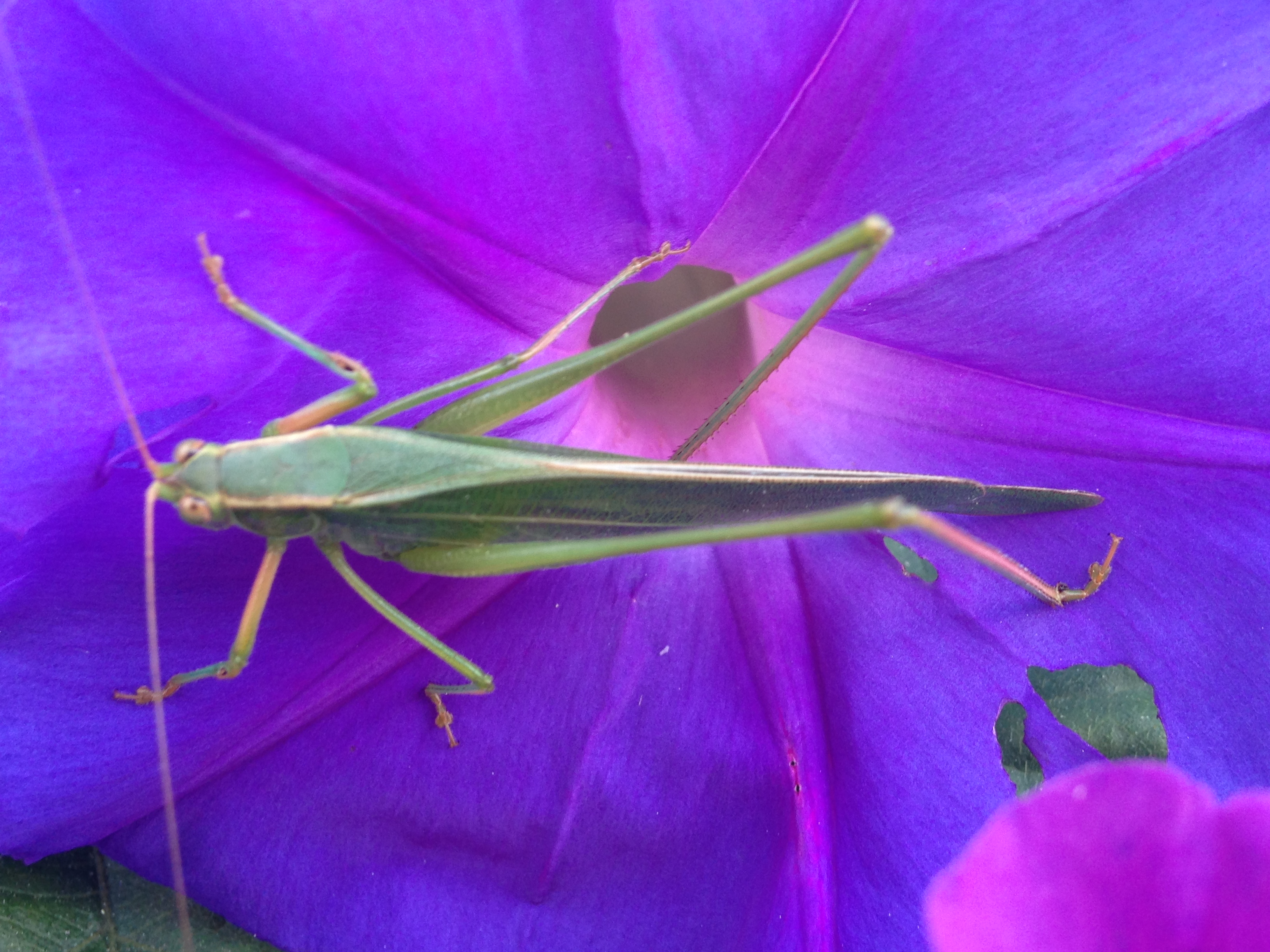
 

Transformation of a child

IMG_7727[1]

“Actually the normal child is one who is precociously intelligent, who has learned to overcome himself and to life in peace, and who prefers a disciplined task to futile idleness…..Man’s true nature lies hidden within himself. And this nature, which was given him at conception, must be recognized and allowed to grow.” (p. 148, para. 1)

Thoughts after reading Part II: 21. The pampered child

It is amazing to watch a classroom transform and become normalized. The first day of school may seem a bit chaotic as new children are added into the mix without previous Montessori experience; however, they will see the actions of the children who are used to the Montessori environment. The teacher will start introducing materials to the student, hoping with each lesson that the child will become interested and begin the transformation.

The normalization process is not just for a certain type of child. Each child has their own developmental obstacles. For a child the normalization process is easier without the distractions. Today’s children may be too involved video games, computer apps or other electronic devices. Some children may seem to fancy elaborate toys or fantasy play. Yet, the Montessori classroom is organized with materials that aid in a child’s self development. Lessons are meaningful and help the child build their own imagination with real knowledge as a foundation.

Montessori, M., & Costelloe, M. J. (1972). Introduction, Childhood: A Social -Problem. The secret of childhood (pp. 143-148). New York: Ballantine Books. (Original work published 1966)